

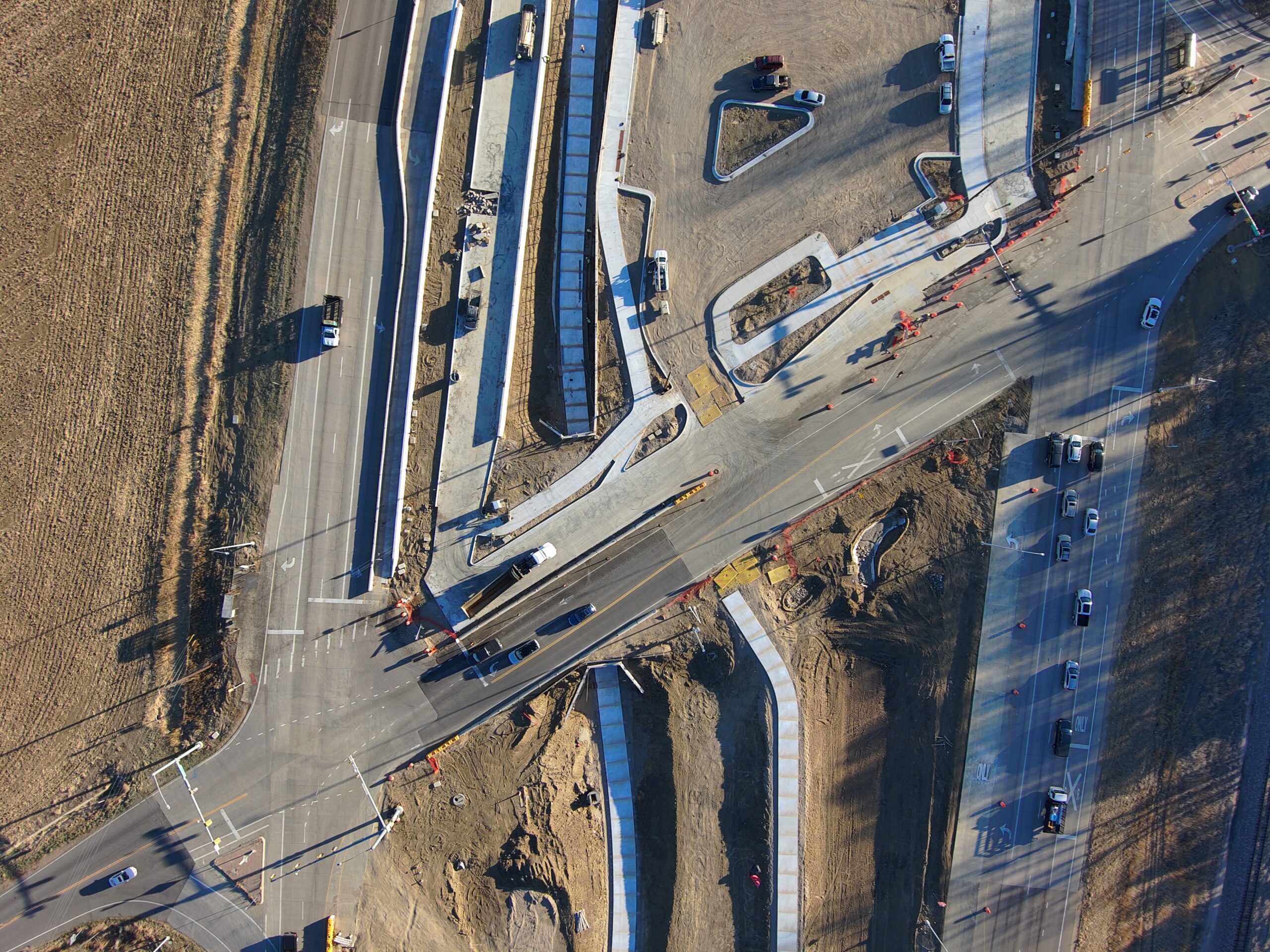
The Colorado Department of Transportation (CDOT) is beginning construction on US 287 in Boulder County starting now. The project is a relatively urgent intervention in response to the abnormally high rate of auto collisions in the project area.
Specifically, CDOT staff is responding to crash data showing “… a large share of the severe and fatal crashes within the project limits involve head-on, opposite sideswipe, and median crossover conflicts with vehicles, the design team is implementing solutions to reduce the direct contributors to those outcomes.”
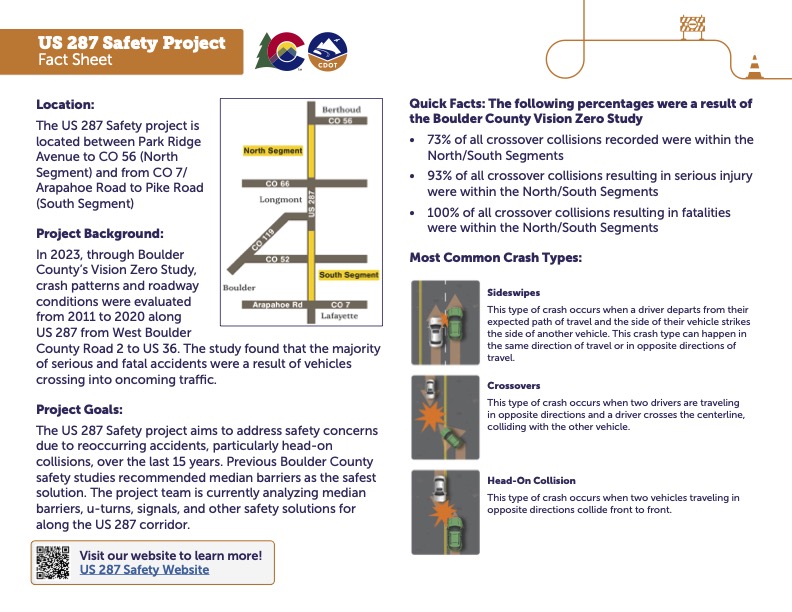
More than data, these crashes have often been terrible tragedies.
This type of urgent project response is part of a two-pronged approach to transportation that Boulder County is exceptional at. The first prong is urgent interventions where the data indicates the need. Using ever-improving crash data, Boulder County partners with The Denver Council of Regional Governments and with CDOT to bring money to safety projects where current conditions are a causing killed and seriously injured. This comes from a specific category of funds.
The second part of Boulder County’s best-in-class transportation policy is to have a Transportation Master Plan that fixes problems in the first place through leading design standards. This comes from other funding sources.
Because the 287 Project is an urgent intervention, it does not have the funding capacity to build to Boulder County’s full design standards which would include dedicated lane space for transit and bus, increased roadway safety, a separated bike-ped facility, and considerations for future connections to rail.
That’s how a project like the Colorado Highway 119 Mobility Project is different. The funding, planning, and design for this $165M project took about 15 years to compile. That’s relatively fast from start to finish. The 119 Project is the full expression of Boulder County’s nationally leading design standards.
Instead of an urgent safety intervention for autos alone, as is the case on US 287, the 119 Project’s goals are to scale five crucial design elements across Boulder County. The first project of this type was US 36 Boulder-Westminster which was completed years ago. It was the prototype project.
- No added general purpose travel lanes. The costs of existing roadways exceeds the funding to maintain their direct costs. Their indirect costs are hard to even quantify.
- Evidence based safety improvements where the data indicates the need. A handful of places along CO 119 The Diagonal will be different than before and that’s because those places were empirically dangerous.
- Design for transit like bus rapid transit that dedicates lane space so that transit is easily accessible and appealing to use.
- A separated hard-surface bikeway built to above standard criteria resulting in another appealing mode that is safe.
- Future connections to rail starting, let’s hope, in 2029.
These elements are connected at a network scale across Boulder County to existing and future modes of transport. The product is safe and appealing access to work, services, and play. Another common way tot put it is mobility, safety, and comfort for all.
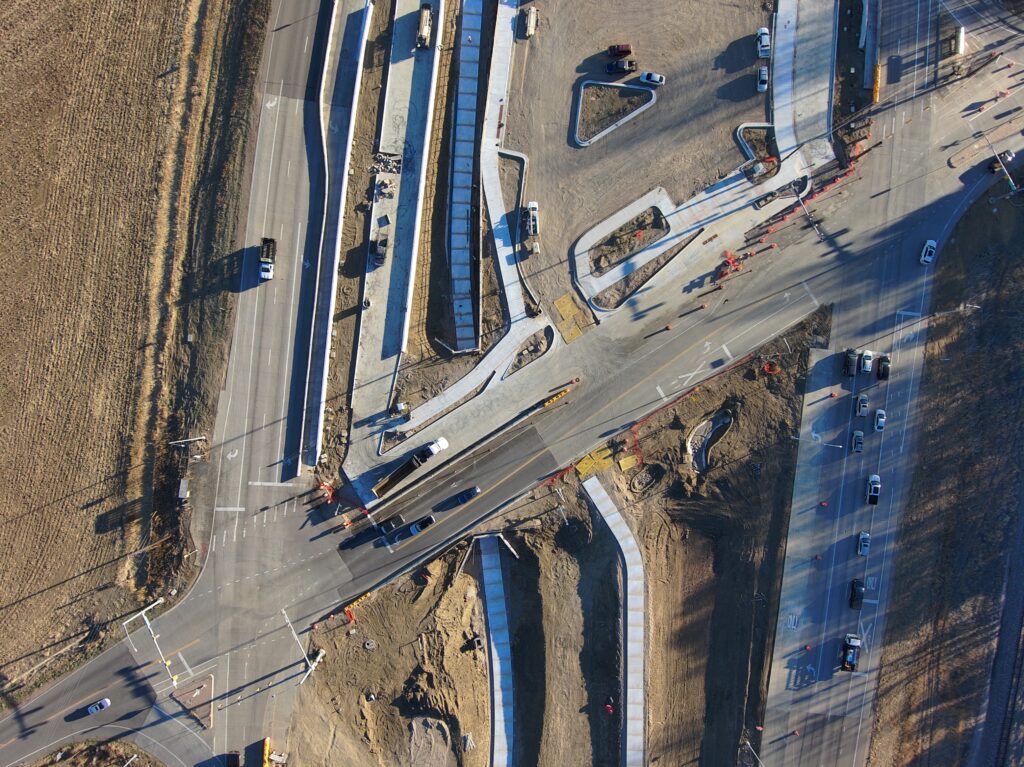
119 construction at Niwot Road, March 2026. What the photo does not show, among other things, is the great low-stress riding northwest of the highway and the LoBo Trail adjacent to the south; all of it soon to be safely connected.
There were about 700 traffic related fatalities in Colorado in 2025 and 3,500-4,000 serious injuries. If Colorado were at the median for peer nations, fatalities would have been around 260.
C4C supports both the 287 and 119 projects. The automobile related problems on 287 needed an urgent intervention and funds are limited so start with what’s most urgent. 119, on the other hand, is a project whose design should be adapted and scaled across Colorado’s diverse transportation landscape.
That’s why C4C has spent eight years supporting similar design and construction on US 36 North Foothills Highway between Boulder and Lyons. This is one of if not the most dangerous roads in the state for cyclists and one with a documented wildlife collision problem that ranks in the top 5% east of the Continental Divide.
This kind of design delivers what in transportation is called “service.” In Boulder County, the intention is to deliver not just service, rather, great human lives. Instead of waking up and being limited by congestion, lethal traffic outcomes, and a dangerous built environment, you can wake up in Boulder County and move freely for work, for services, and for play across a connected network.
Thanks for supporting C4C.