

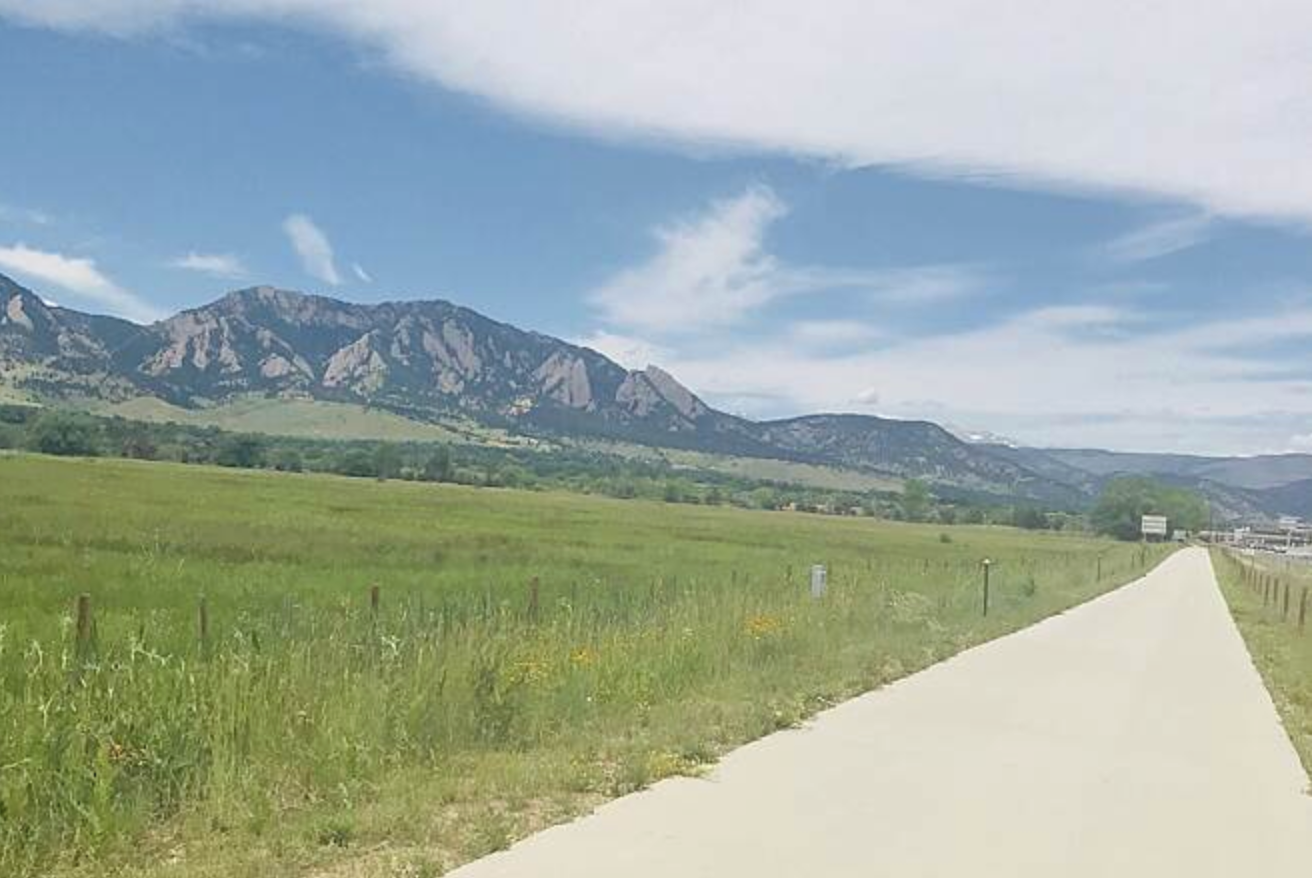
In July, a driver reportedly fell asleep at the wheel and consequently departed the US 36 roadway coming to a stop near or on the parallel bikeway southeast of Boulder. See Ride Broomfield’s Instagram post for more information, https://www.instagram.com/reel/DMdVg_YNnbR/?utm_source=ig_web_copy_link.
For C4C, this is a positive example of design and engineering standards that work. The US 36 Project that took place years ago included a separated bikeway. Managed by CDOT, the right-of-way is partially in Boulder County whose planning standard is to separate bike-ped users from highway speed and volume auto traffic. Working in partnership, it was agreed to build a separated bikeway. Since its construction, there have been zero auto-on-bike serious injuries or fatalities on the separated bikeway.
The US 36 Boulder – Westminster project was a start to what is now happening on Highway 119 The Diagonal Boulder – Longmont and, if funding is awarded, will begin to happen on US 36 North Foothills Highway Boulder – Lyons. Those two roads are the two most dangerous roads in Boulder County for cyclists if not Colorado as a whole. The same is planned for Highway 7 Arapahoe Boulder – Brighton, Highway 66 Longmont – Lyons, US 287 Louisville/Lafayette to Longmont, and South Boulder Road Boulder – Louisville.
Plans are unclear for Highway 93 Golden – Boulder, Highway 52, and US 287 north of Longmont to Larimer County where progress is being made on bikeways as well.
There were two cyclists in the vicinity of the roadway departure on US 36 in July. If those cyclists had no option to use a separated path and, instead, had been on the shoulder, the result could have easily been serious injury or fatality for the cyclists.
Standards are 30′ of horizontal separation from the roadway’s white edge-line to a separated path. If that’s not available, then there should be vertical separation in the form of barriers. Boulder County did communicate the crash to CDOT.
With a problem of this scale, fixing every linear foot of roadway is maybe less useful than doing what Boulder County and CDOT are doing in partnership which is incrementally improving highways with separated paths where it makes sense. If it doesn’t make sense, then the design question is where can a complementary bike-ped facility exist?
Along with urgent engineering interventions where the crash data shows the need and along with maintaining the transportation system we already have, improved planning and design like what exists on US 36 is working. Good planning and design are creating mobility, safety, and comfort for all users.

Outcomes are superior when staff is supported to design to standards. Excess deaths are reduced or even eliminated by good design.
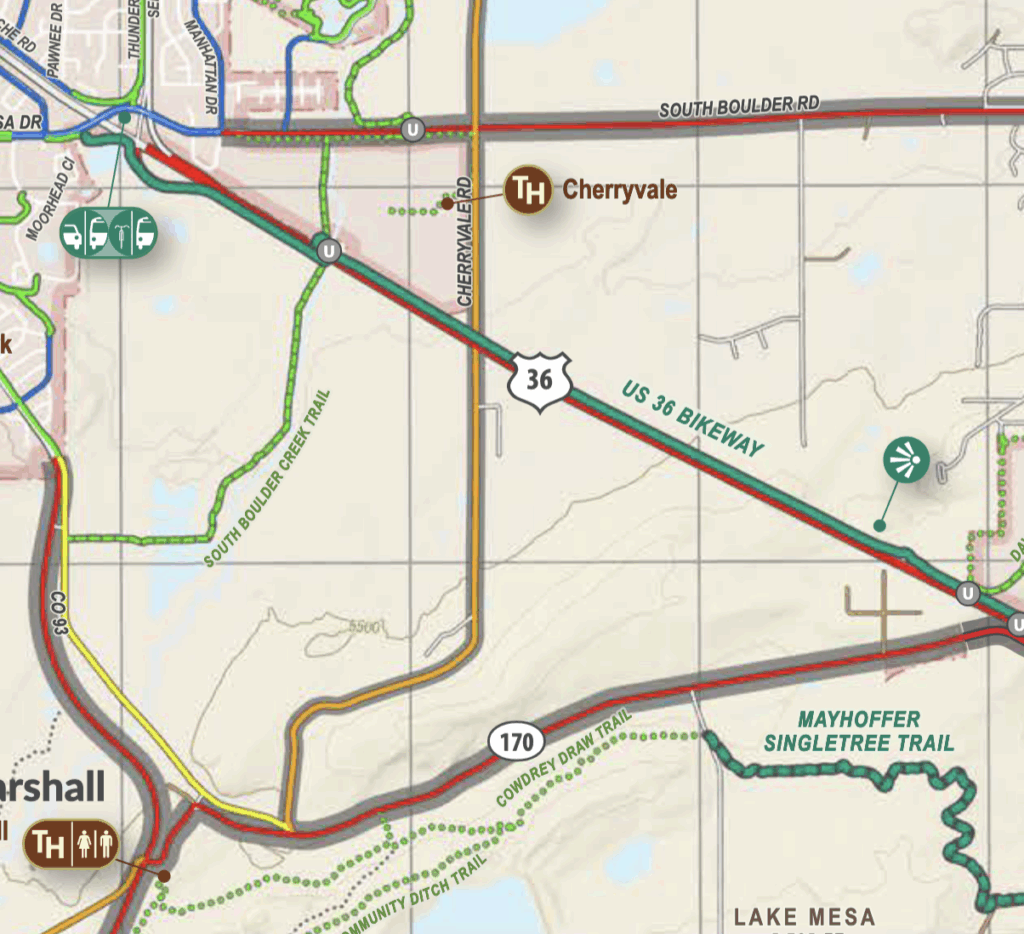
The red indicates high-stress and forecast adverse safety outcomes. The green indicates a safe place to walk, ride, and roll. When design is to standards, the result is a roadway for cars and a bikeway for bike-ped use resulting in mobility, safety, and comfort for all.